Ankle Sprain
and Instability
A stretched or torn ligament on the outer ankle, and the looseness
that can follow repeat injuries.

An ankle sprain happens when the foot rolls inward and the ligaments on the outer ankle stretch or tear. The anterior talofibular ligament is injured most often. Most sprains heal well. After several sprains, some people develop chronic lateral ankle instability—the ankle feels loose and gives way on uneven ground.
What it is?

Symptoms
Immediate pain on the outer ankle after a roll or twist
Swelling and bruising that may spread into the foot
Difficulty bearing weight in more severe sprains
Recurrent giving-way, uneven-ground anxiety, or ongoing swelling in chronic instability
Causes and Risk Factors
Sports, a misstep off a curb, and high heels are common settings. Prior sprain, weak peroneal muscles, and hindfoot alignment can raise the chance of another injury.
How It Is Diagnosed
Exam checks swelling, tenderness, and ligament laxity. MRI is used for persistent pain, suspected cartilage injury, or preoperative planning.
Nonsurgical Treatment
Almost all first-time sprains are treated without surgery.
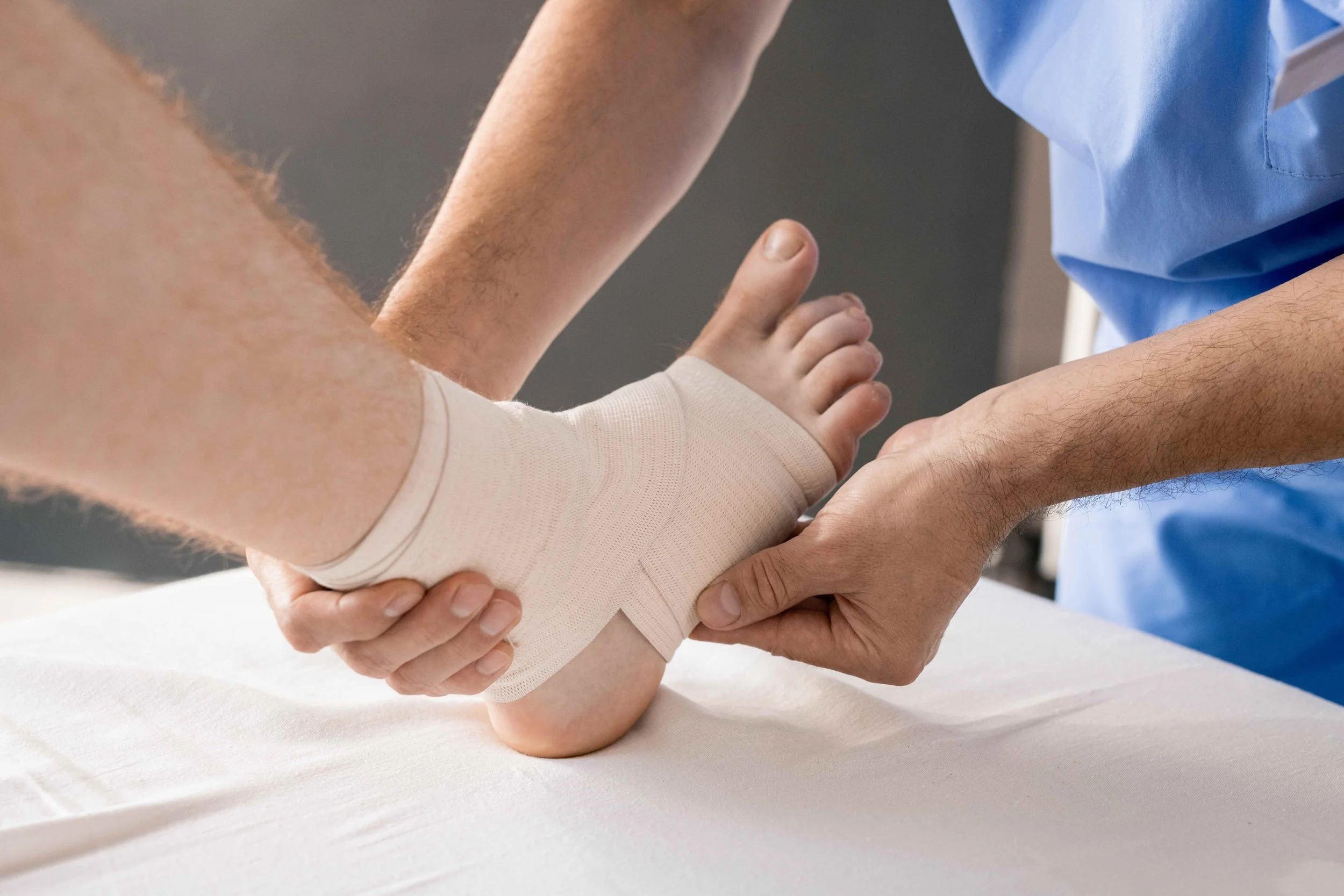
Protection, rest as needed, ice, compression, and elevation in the first days
Early protected walking as pain allows; avoid prolonged immobilization
Physical therapy for motion, balance (proprioception), and peroneal strength
A lace-up brace for return to sport and for chronic looseness
Surgical Treatment
Surgery is considered for documented instability that continues after a full rehab program, or for a severe injury with other damage inside the joint. Ligament repair or reconstruction is usually outpatient. Return to cutting sports often takes four to six months.
When to See a Specialist
Have the ankle checked if you cannot take four steps, if bone is tender, if swelling is severe, or if the ankle keeps giving way months after the original sprain.
Frequently Asked Questions
-
Usually no. Brief protection followed by guided motion and strengthening leads to a better result than long immobilization.
-
When swelling is controlled, you can hop and cut on that side, and balance has been retrained—not simply when pain is gone.
Take the Next Step Toward the Right Treatment
If this condition is limiting your walking, work, or shoes, schedule an evaluation. A focused exam and X-rays, when needed, will clarify the diagnosis and the least invasive plan that can get you comfortable again.