

Bunions
A bony bump at the base of the big toe that can make shoes and walking painful.
WHAT IS IT?
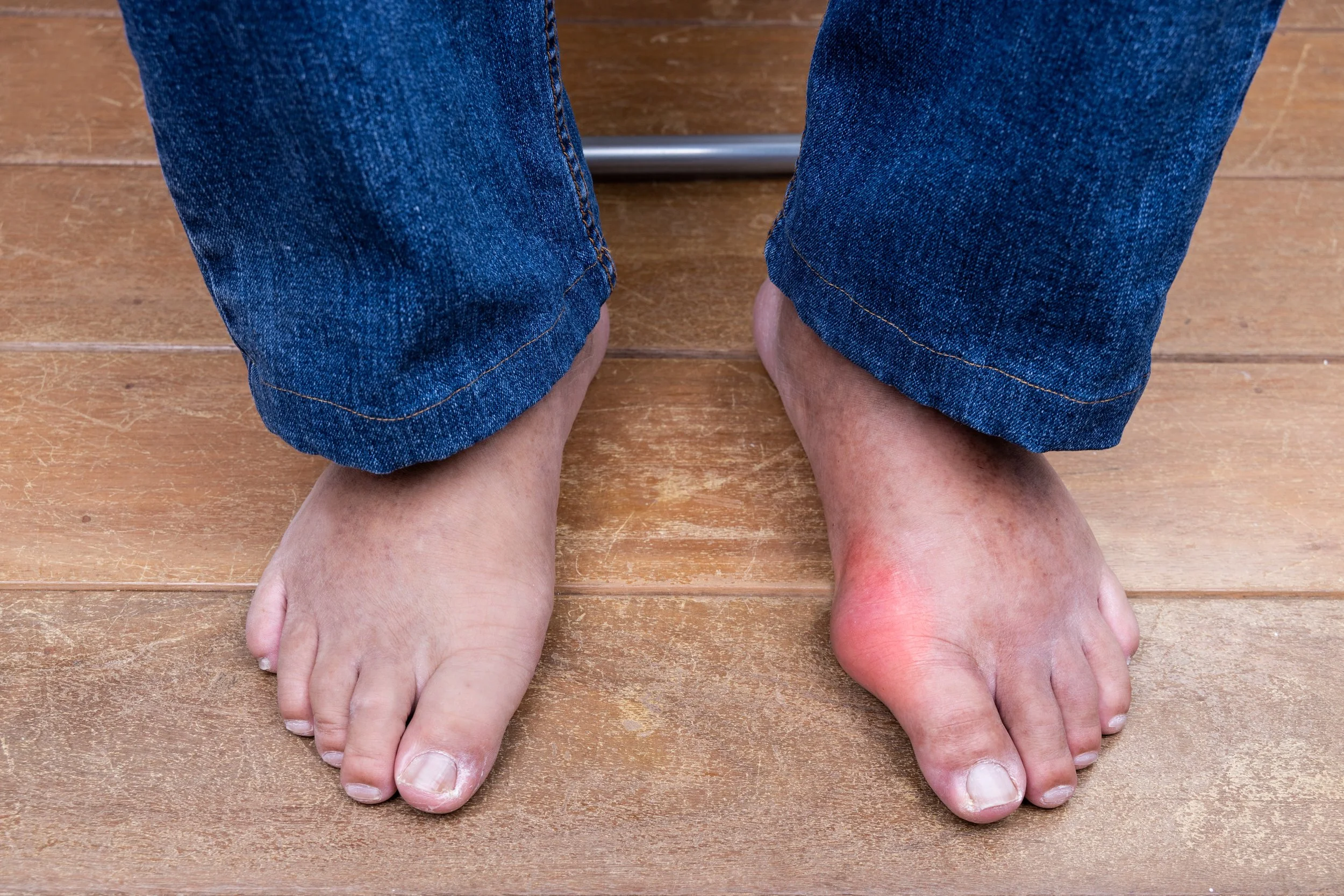
A bunion is a prominence on the inner (medial) side of the foot at the big-toe joint. The first metatarsal bone drifts inward while the big toe angles toward the lesser toes. The bump is not a new growth of bone so much as a change in joint alignment. A similar, smaller bump at the little-toe joint is called a bunionette (tailor’s bunion).
-
Symptoms
A visible bump on the inner side of the big-toe joint
Redness, swelling, or tenderness over the bump, especially in tight shoes
Pain with walking or standing as the joint enlarges
The big toe drifting toward or under the second toe
Callus or pain under the ball of the foot
Stiffness or arthritis in the joint in more advanced cases
-
Causes and Risk Factors
Many bunions develop from inherited foot shape and the way the foot loads with each step. Narrow or pointed shoes and heels do not create the deformity by themselves, but they speed pain and progression. Inflammatory arthritis can also alter the joint. Women are affected more often than men, in part because of footwear and ligament laxity.
-
How It Is Diagnosed
Diagnosis is usually clear on examination. Standing X-rays show the angle between the first and second metatarsals, the position of the big toe, and whether arthritis is present. That information guides whether simple measures are enough or whether realignment surgery should be discussed.
-
Nonsurgical Treatment
A bunion will not straighten without surgery, but many people stay comfortable for years with conservative care.
Supportive shoes with a wide, deep toe box and a low heel; avoid pointed styles
Soft pads over the bump and a spacer between the first and second toes
Activity modification and short courses of anti-inflammatory medication
Ice after long days on your feet
-
Surgical Treatment
Surgery is considered when pain persists despite better shoes and padding, or when the toe position interferes with walking. The goal is to realign the metatarsal and big toe, balance the soft tissues, and reduce the bump. The exact procedure depends on the size of the deformity and whether the joint is arthritic. Many selected bunions can be corrected with minimally invasive techniques—small incisions, a precision burr, and screw fixation—when the joint is not arthritic and the deformity pattern is appropriate. Open surgery remains the better choice for some feet. Most operations are outpatient. Swelling and stiffness commonly last several months; full recovery often takes three to six months. See the minimally invasive surgery page for how that approach compares with open correction.
-
When to See a Specialist
See a foot and ankle orthopedic surgeon if the bump is getting larger, shoes are hard to wear, pain is limiting daily activity, or the second toe is beginning to crowd or cross.
Frequently Asked Questions
-
They often progress slowly. How fast they change varies. Pain is a better reason to treat than appearance alone.
-
No. Wider shoes and pads reduce pressure and pain. They do not put the bones back into place.
-
Surgery is for painful bunions that have not responded to conservative care, not for mild bumps that do not bother you.
-
Often yes, if the joint still moves and the deformity fits a minimally invasive plan. Severe arthritis or some revision problems are still treated through a traditional incision.
If this condition is limiting your walking, work, or shoes, schedule an evaluation. A focused exam and X-rays, when needed, will clarify the diagnosis and the least invasive plan that can get you comfortable again.