
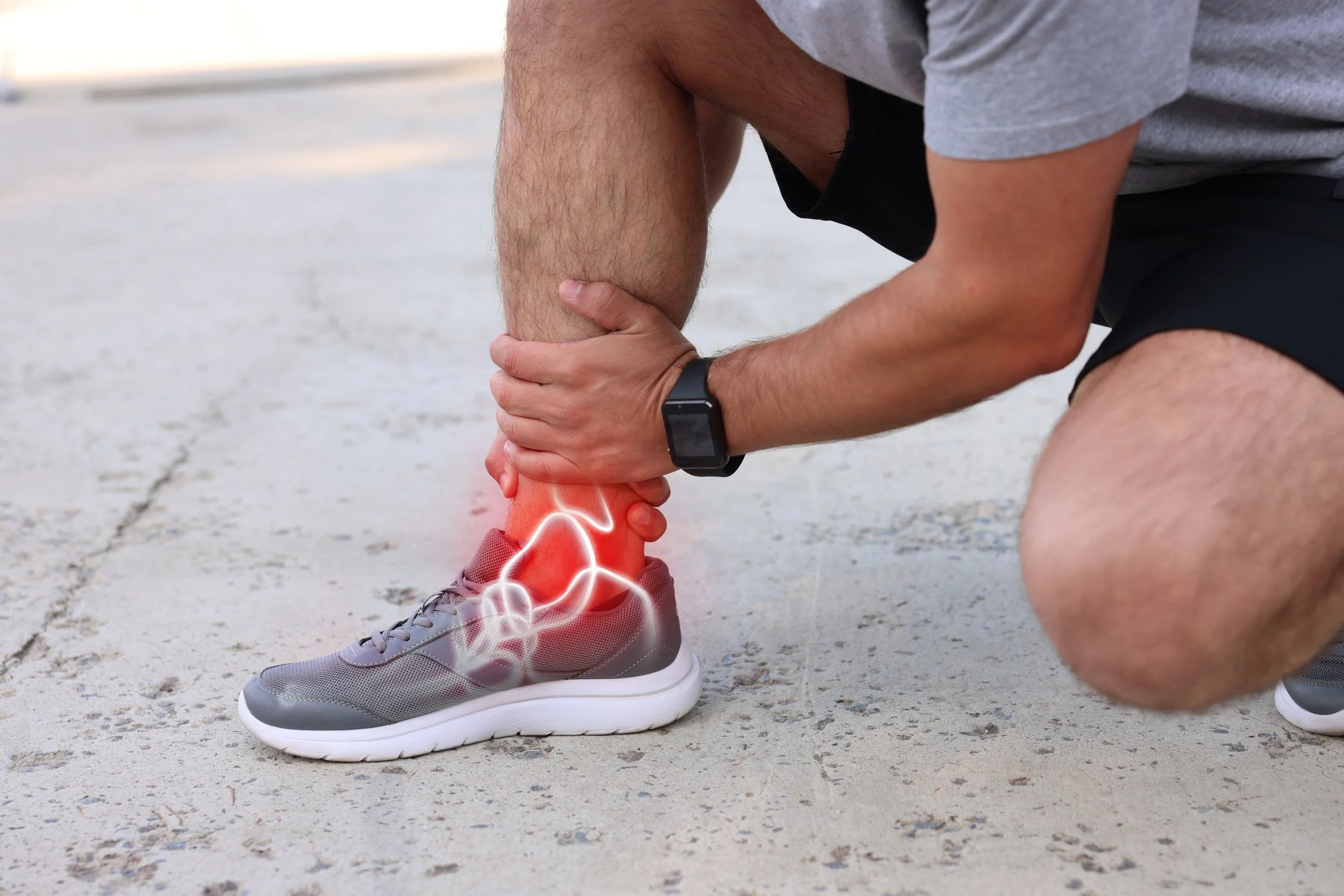
Ankle Arthritis
Worn cartilage in the ankle joint that causes stiffness, swelling, and activity-related pain.
What is it?
Ankle arthritis is loss of the smooth cartilage that lets the tibia, fibula, and talus glide. Unlike hip or knee arthritis, most ankle arthritis follows an old fracture, repeated sprains, or damage to the joint surface. As the cartilage thins, bone rubs on bone, bone spurs form, and the joint stiffens.
-
Symptoms
Deep ache in the front or inside of the ankle that worsens with walking
Stiffness after sitting, then pain that builds over the day
Swelling around the joint, especially after activity
A catching or grinding sensation
Difficulty with hills, stairs, and uneven ground
In later stages, a change in the way the foot sits on the floor
-
Causes and Risk Factors
A prior ankle fracture is the most common cause. Chronic instability, inflammatory arthritis (including rheumatoid disease), and—less often—primary osteoarthritis also wear the joint. Years may pass between the original injury and daily pain.
-
How It Is Diagnosed
Standing ankle X-rays show joint-space narrowing, bone spurs, and alignment. The exam documents motion, swelling, and whether the hindfoot is still well aligned.
-
Nonsurgical Treatment
Many people stay active for a long time without an operation if the joint is braced.
Activity change: keep walking and cycling; reduce impact and long hills
A lace-up brace, Arizona-style gauntlet, or ankle-foot orthosis to limit painful motion
Rocker-sole or stiff-soled shoes that roll the foot through stance
Weight management when it applies
Anti-inflammatory medication and occasional joint injection
-
Surgical Treatment
When pain limits walking despite bracing, surgery depends on how much cartilage remains and whether the ankle is still aligned. Arthroscopy can clean loose bone and inflamed tissue in early disease. Realignment osteotomy is used in selected patients with wear on only one side of the joint. End-stage arthritis is treated with ankle fusion (arthrodesis) or total ankle replacement. Fusion is durable and reliable. Replacement preserves some motion and is considered in lower-demand patients with good alignment and healthy bone. Recovery after either reconstructive operation is measured in months.
-
When to See a Specialist
See a foot and ankle orthopedic surgeon if ankle pain lasts more than a few weeks, an old fracture site has become painful years later, or bracing no longer gets you through the day.
Frequently Asked Questions
-
Neither is universally better. Fusion is the more predictable pain-relieving operation. Replacement can keep some motion and may spare nearby joints. The choice depends on age, alignment, bone quality, and your activity goals.
-
Most people walk in a regular shoe after the ankle fuses. The gait is a little stiffer. Running and steep hills are more limited.

Don’t Let Ankle Pain Keep You on the Sidelines
If this condition is limiting your walking, work, or shoes, schedule an evaluation. A focused exam and X-rays, when needed, will clarify the diagnosis and the least invasive plan that can get you comfortable again.